
remix: US congressional staff salaries
Here is a new "remix" -- public information more easily available from a private source than from the government itself.
Storming Media, a private, independent reseller of Pentagon and other US federal government reports on many subjects, is now making available, for free, US congressional staff salaries in an easy to browse web interface. They obtain the data from the official record books: the Secretary of the Senate and the Clerk of the House reports. Continue readingSites for election junkies
I've been checking electoral-vote.com fairly regularly for the last 2 weeks. The votemaster (aka Andrew S. Tanenbaum, a professor of computer science at the Vrije Universiteit in Holland) tracks electoral votes state by state based on polls from across the political spectrum. Today, CNET published a story saying that Google plans to release its Google Earth election mashup, a new data layer available on the Google Earth appliance (download Google Earth here). "Google Earth 2006 election resource tool indicates the country's 436 congressional districts with stars on the popular 3D map of the country. Clicking on a star pops open a bubble window that has information on the candidates in that race." Anyone know of other election tracking sites? Please post them in the comments. Continue reading
OMBWatch releases database of govt spending
A few months ago, there was much talk about S2530 -- which became Public Law 109-282, the Federal Funding and Accountability Transparency Act of 2006. It was in the news because an anonymous Senator (later revealed to be Senator Ted Stevens of AK) at first blocked its passage (see here and here). Well now OMBWatch has trumped the Federal govt and announced the creation of a public database called FedSpending.org. The database "allows users to search and aggregate contract and grant information in a number of ways: by individual recipient, by agency, by congressional district and by state, and allows citizens to see exactly where their tax dollars are being spent. There is data going back to FY 2000 so that comparisons over time can be made." There's even a nice tutorial to help users learn how to use the database. The database is a welcome addition to citizens trying to keep track of federal govt spending and will be a great tool for libraries answering reference questions on govt budgets. Check it out! Continue reading
Attorney General’s Report on FOIA
How is the Freedom of Information Act doing? 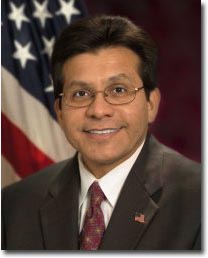 It is a key component of government information and essential for that body of information that does not get published and distributed even on agency web sites. Last week, the Department of Justice released the Attorney General's Report to the President on FOIA Administration (October 16, 2006. PDF, 17pp. See also the press release accompanying the report).
Attorney General
Alberto R. Gonzales
Steven Aftergood points out that the report boasts of "reforms" that "may loom large within the government, but still appear inconsequential from the outside." The report, for example, makes much of using post cards to acknowledge receipt of FOIA requests instead of more formal letters and calls this a "novel idea...an outstanding idea." Such changes, Aftergood notes, are more about efficiency than productivity and "the executive order does little to improve productivity."
- Attorney General Reports on FOIA by Steven Aftergood (October 17, 2006) Secrecy News
The National Security Archive at George Washington University responded to the Attorney General's report with a letter to the Attorney General and a call for congressional oversight hearings to make optimistic FOIA processing goals a reality. It notes that the Attorney General's report is "merely an overview of 91 individual FOIA improvement plans drafted by federal agencies" and that "It fails to acknowledge that many of the admirable goals set by the agencies can only be met with an increased commitment of resources -- which the Executive Order makes clear is not being considered by the Administration."
In separate letters to the two principal congressional committees with oversight responsibility for FOIA the National Security Archive reiterates agencies' lack of basic technology such as copiers and Internet access.
- Attorney General's Report Ignores Serious Problems in Agency FOIA Programs, National Security Archive (October 19, 2006)
For more background on FOIA see Happy 40th anniversary FOIA!! or see the results of a simple search of FGI for our coverage of FOIA.
Continue readingNot Just Blogs: Government Information in the Digital Era: Free Culture or Controlled Substance?
FGI is more than the blog. We also have articles of greater length and substance here on the FGI site. Sometimes those show up as blog entries and some are highlighted on the Library page. Today we feature an article from last year: Government Information in the Digital Era: Free Culture or Controlled Substance?. This is a detailed summary of a paper by Karrie Peterson and James A. Jacobs that we presented at the symposium, Free Culture and the Digital Library, at Emory University in Atlanta Georgia in October of 2005. Whether you missed it when originally posted or just want a quick overview of some key issues, we recommend it. As always, we welcome your comments. Address them to admin at freegovinfo.info Continue reading