
Open Access for CRS reports bubbling to the fore
Daniel Schuman, Policy Counsel and Director, Advisory Committee on Transparency of the Sunlight Foundation, writes that Reps. Mike Quigley and Leonard Lance are leading the charge in the House of Representatives to make CRS Reports publicly accessible. They've introduced (or RE-introduced) H.Res.110 - Congressional Research Service Electronic Accessibility Resolution of 2013. Hopefully this will be the year that Congress decides to share.
Former Senator Daniel Patrick Moynihan famously said that "everyone is entitled to his own opinion, but not his own facts." In 1914, an uncharacteristically foresighted Congress spent $25,000 to establish a fact-finding arm whose mission was to gather "data ... bearing upon legislation, and to render such data serviceable to Congress." A century later, the Congressional Research Service generates hundreds of analytical non-partisan reports on legislative issues each year. CRS reports often inform public debate. A recent analysis, which found no correlation between economic growth and cutting tax rates for the wealthy, set off a re-appraisal of long-held orthodoxy about tax policy. A 2006 analysis questioning the legal rationale supporting the Bush administration's warrantless wiretapping policy caused many to look at the issue with fresh eyes. CRS analyses are routinely cited in news reports, by the courts, in congressional debate, and by government watchdogs. However, unlike its sister agencies that investigate federal spending and analyze the budgetary effects of legislation, CRS does not release its reports to the public on a regular basis. This was not always so, and even now CRS routinely shares its reports with officials in the executive and judicial branches and with the press upon request. Congressional offices also act to disseminate the reports, publishing some on their websites, frequently sending others to constituents in response to requests, and giving them to reporters (often to help push a political narrative.) But for a member of the public, it's difficult to access reports generated by the 600-person $100 million-a-year agency in any comprehensive way. Efforts by non-profit organizations to gather and re-publish the reports online have met with limited success. The private sector has stepped in, selling access to the reports at $20 a pop, but the premium accentuates the gap between the elites and everyone else.Continue reading
GPO Response to NAPA Report’s Recommendation to Charge for FDsys access
Acting Public Printer Davita Vance-Cooks has responded to the letter by the group CASSANDRA about the recent report Rebooting the Government Printing Office: Keeping America Informed in the Digital Age by the National Association of Public Administration (NAPA). . The report recommends that GPO should consider "cost recovery" for access to FDsys (See NAPA releases report on GPO). The Response from Vance-Cooks says that GPO has "no intention of charging public users a fee to access content available through FDsys. GPO remains committed to no-fee access to FDsys for the public as part of our mission of Keeping America Informed." This is, of course, good news, but we have to temper our enthusiasm with the realization that GPO's ability to meet its intentions will inevitably be dictated by Congress and its budget. The complete response is attached below:
What the White House Looks Like Completely Gutted
The National Journal posted a story about the renovation of the White House in the years after WWII. See the photos from the National Archives via the Truman Library.
Experts called the third floor of the White House "an outstanding example of a firetrap." The result of a federally commissioned report found the mansion's plumbing "makeshift and unsanitary," while "the structural deterioration [was] in 'appalling degree,' and threatening complete collapse." The congressional commission on the matter was considering the option of abandoning the structure altogether in favor of a built-from-scratch mansion, but President Truman lobbied for the restoration. "It perhaps would be more economical from a purely financial standpoint to raze the building and to rebuild completely," he testified to Congress in February 1949. "In doing so, however, there would be destroyed a building of tremendous historical significance in the growth of the nation." So it had to be gutted. Completely. Every piece of the interior, including the walls, had to be removed and put in storage. The outside of the structure-reinforced by new concrete columns-was all that remained.

Lunchtime listen: Razzle dazzle WWI ship camouflage
99% Invisible is one of my favorite podcasts. Roman Mars talks about architecture and design in a really thoughtful and compelling way. He had a recent episode about razzle dazzle ships' camouflage in which he included images from the Rhode Island School of Design (RISD)'s Fleet Library (which is NOT connected to the Navy in any way :-)). Check out this fascinating listen about ships and camouflage.
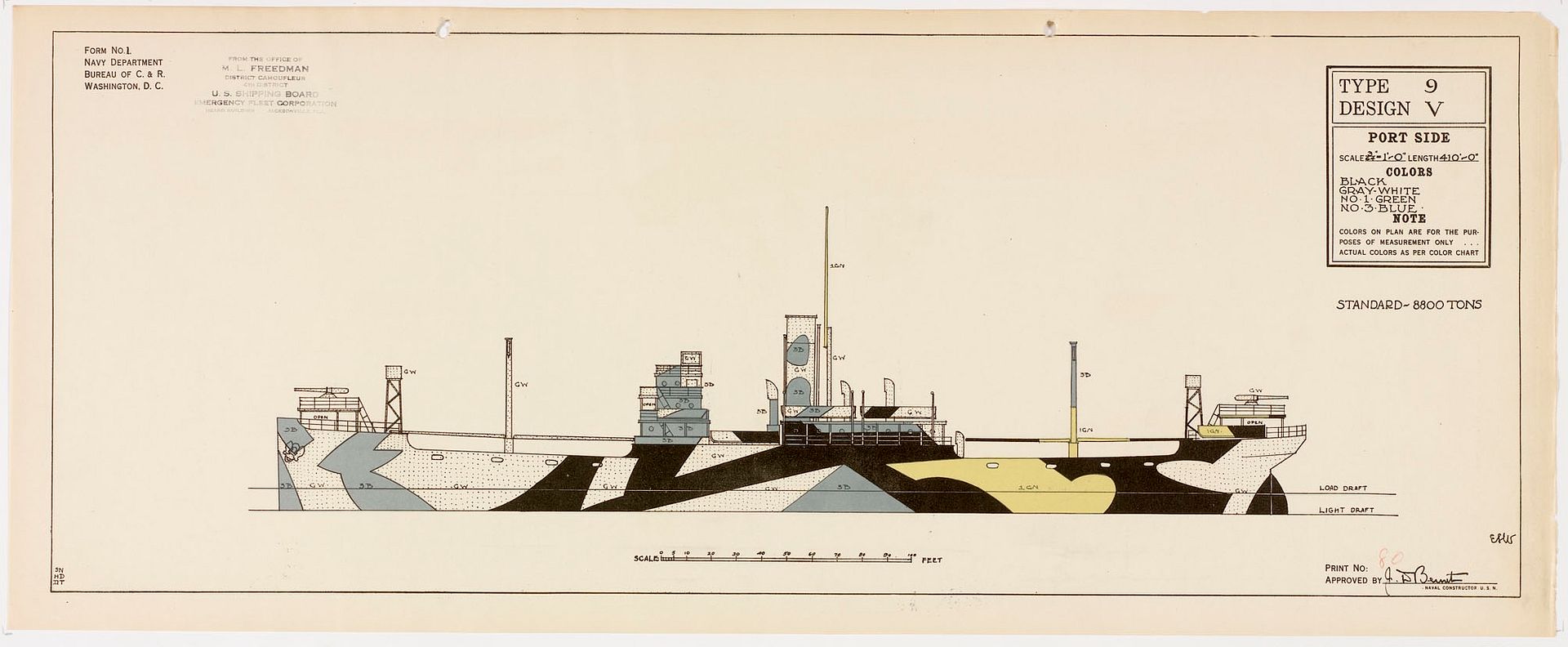 (Erik Gould, courtesy of the Fleet Library at RISD, Providence, RI..)
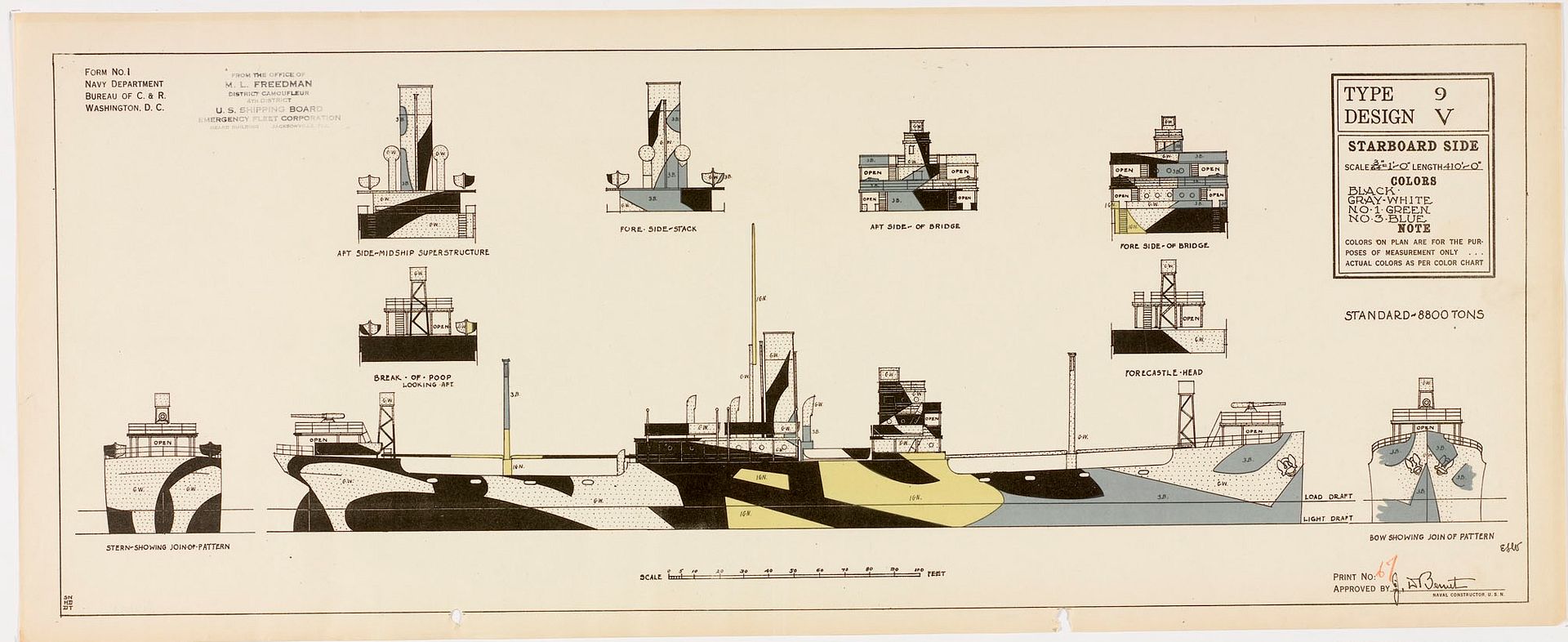
(Erik Gould, courtesy of the Fleet Library at RISD, Providence, RI.)
Becoming invisible with your surroundings is only one type of camouflage. Camofleurs call this high similarity or blending camouflage. But camouflage can also take the opposite approach.
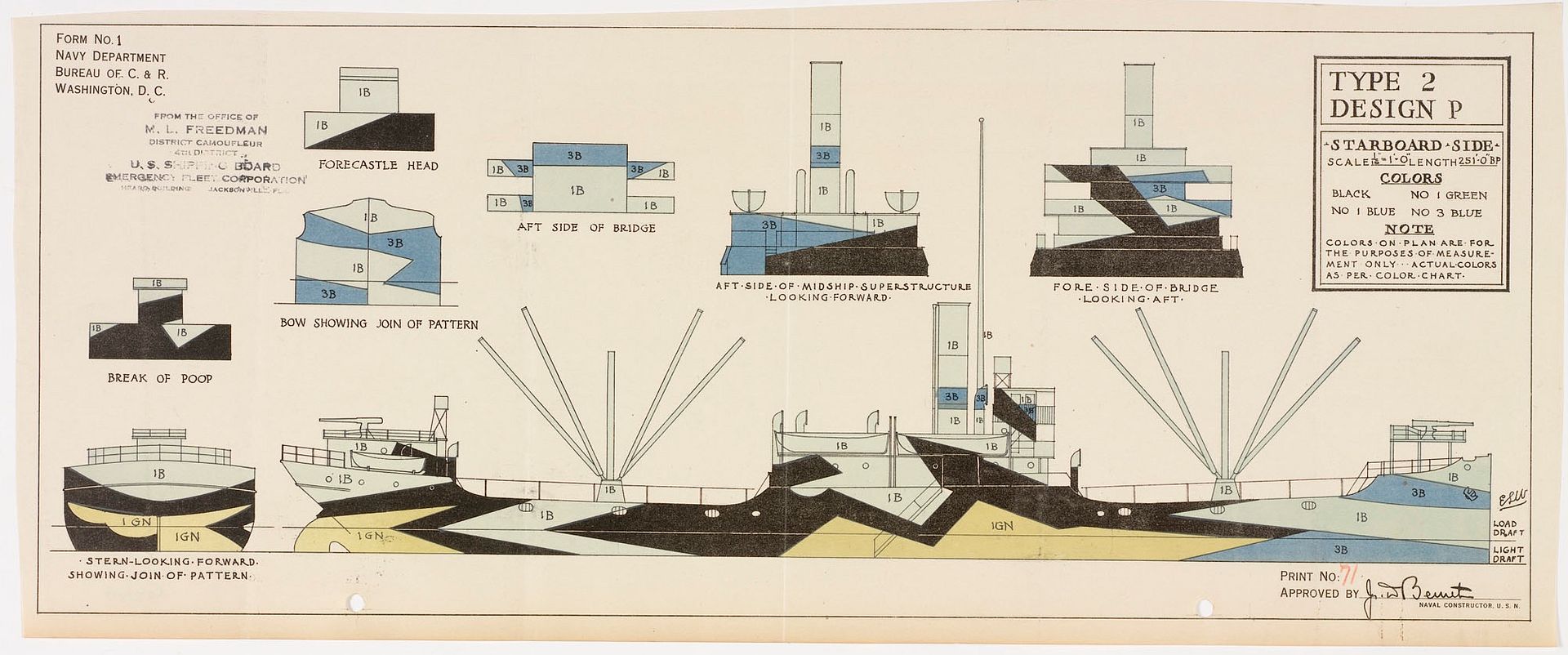
(Erik Gould, courtesy of the Fleet Library at RISD, Providence, RI.)
Continue reading
When we depend on pointing instead of collecting
March 23, 2013 / 4 Comments on When we depend on pointing instead of collecting
NASA took its Technical Report Server (http://ntrs.nasa.gov/) offline this week, saying :
As Steven Aftergood reported at Secrecy News [emphasis added]: Michael L. Nelson of the Department of Computer Science at Old Dominion University investigated the availability of some of the NASA reports at other archives and reports his findings on his blog:- NTRS, Web Archives, and Why We Should Build Collections, by Michael L. Nelson, Web Science and Digital Libraries (March 23, 2013).
Nelson found that some reports are available at http://naca.central.cranfield.ac.uk/ which is an archive of some NASA information that Nelson helped establish after NASA websites were taken down after September 11, 2001. He notes that the removal of information from NASA servers at that time "made it clear to me that NASA information was too important to be left on *.nasa.gov computers." He found more data at the Internet Archive's "NASA Technical Documents" collection: http://archive.org/details/nasa_techdocs and in Mark Phillips NACA collection at http://digital.library.unt.edu/explore/collections/NACA/ . Nelson draws some conclusions from all this [emphasis added]: In other words, pointing to web sites is much less valuable and much more fragile than acquiring copies of digital information and building digital collections that you control. The OAIS reference model for long term preservation makes this a requirement, saying that an organization that intends to provide information to its user community for the long-term, must "Obtain sufficient control of the information provided to the level needed to ensure Long-Term Preservation." Pointing to a web page or PDF at nasa.gov is not obtaining any control. He also makes a distinction between those things that are saved because of their popularity and things that will not be saved unless special care is taken to preserve them: And he notes the importance of multiple copies: And Aftergood concludes [emphasis added]: Here at FGI, we have repeatedly argued that identifying important information that warrants explicit preservation is the age-old role of libraries in society and that it still is (or should be) the key value of libraries in the digital age. Many government agencies, including NASA and the Government Printing Office have good intentions and good programs for preservation and access, but those agencies cannot guarantee that they will always provide preservation and access. In the case of the NTRS web site, Aftergood and others speculate that the take down was a response to a demand by a single Congressman who said in a press conference on March 18 [emphasis added]: The NTRS web site was taken offline on March 19. Government agencies are subject to political activities like this and budgetary limitations. Very bad things can happen which, in cases like this can remove from access, "all NASA technical documents, no matter how voluminous and valuable they are" in a single moment. Libraries should still be selecting, acquiring, organizing, and preserving information for their user-communities, and providing access to and services for those collections. Libraries do no one a long-term service by simply pointing to resources over which they have no control and which someone else can simply make unavailable literally at the flick of a switch. FDLP libraries should demand digital deposit from GPO and should actively select and acquire that digital public government information that is of value to their user communities that GPO cannot deposit because it is outside the scope of Title 44. Continue reading →Continue Reading →