
Home » Posts tagged 'lunchtime' (Page 4)
Tag Archives: lunchtime
Lunchtime listen: Razzle dazzle WWI ship camouflage
99% Invisible is one of my favorite podcasts. Roman Mars talks about architecture and design in a really thoughtful and compelling way. He had a recent episode about razzle dazzle ships' camouflage in which he included images from the Rhode Island School of Design (RISD)'s Fleet Library (which is NOT connected to the Navy in any way :-)). Check out this fascinating listen about ships and camouflage.
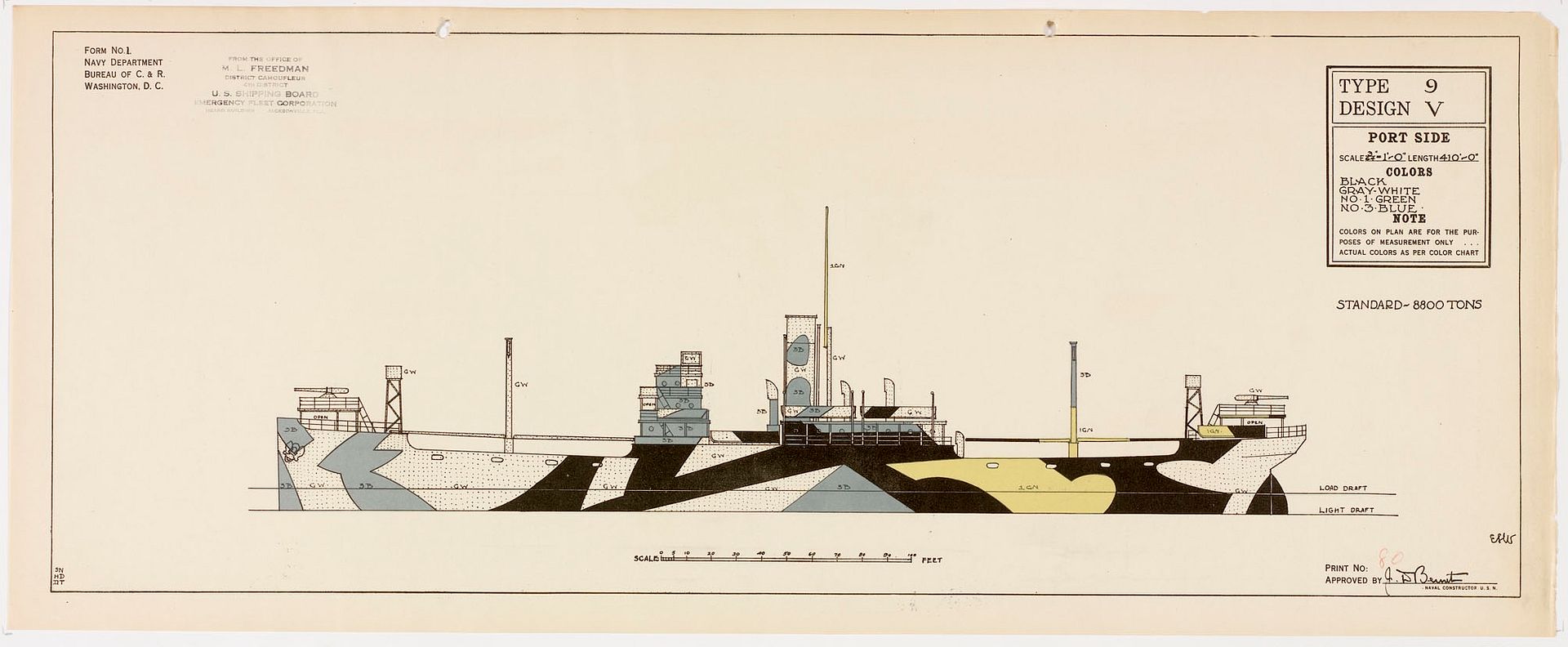 (Erik Gould, courtesy of the Fleet Library at RISD, Providence, RI..)
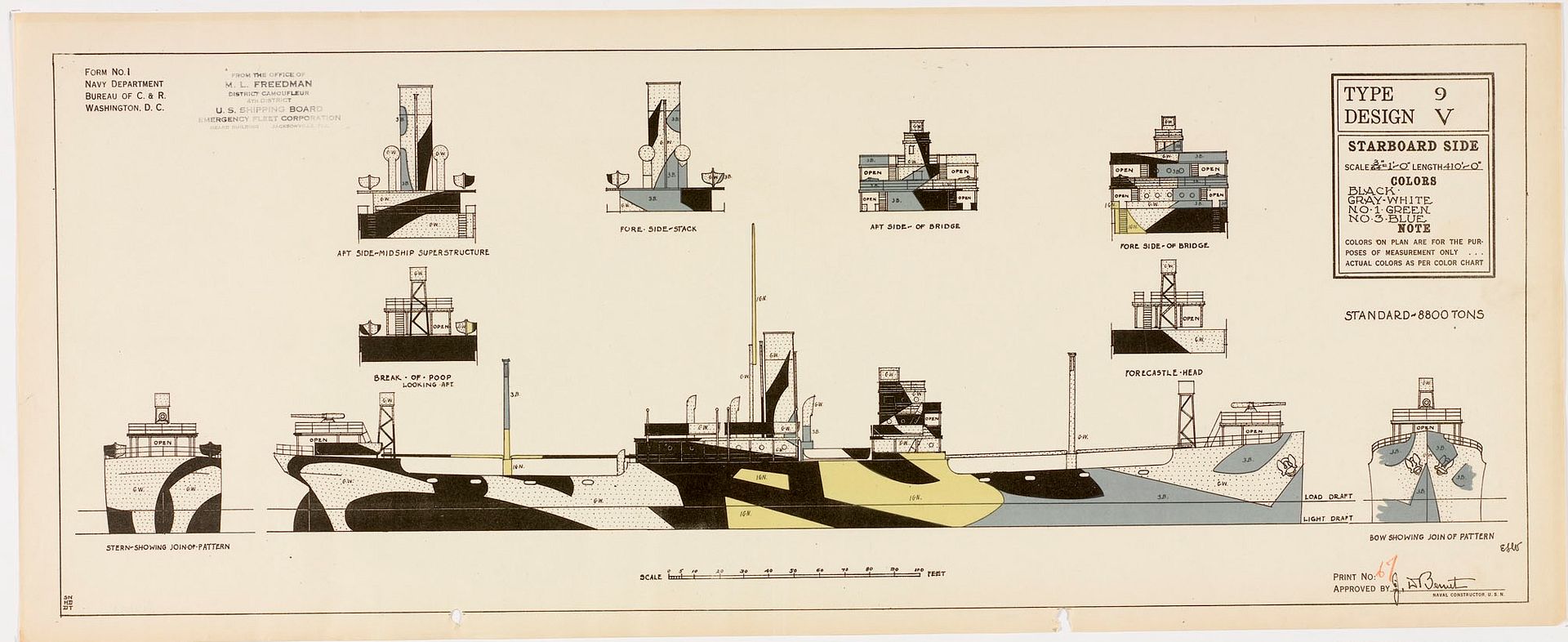
(Erik Gould, courtesy of the Fleet Library at RISD, Providence, RI.)
Becoming invisible with your surroundings is only one type of camouflage. Camofleurs call this high similarity or blending camouflage. But camouflage can also take the opposite approach.
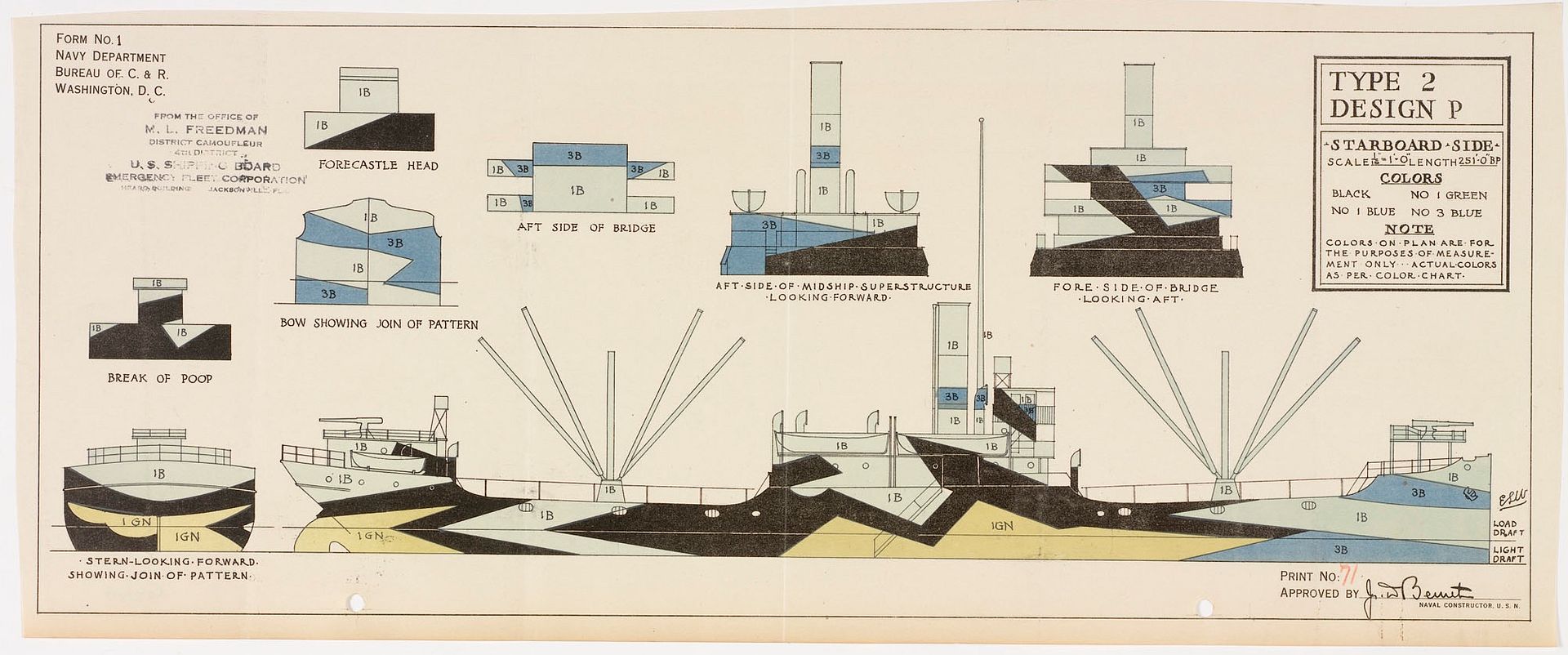
(Erik Gould, courtesy of the Fleet Library at RISD, Providence, RI.)
Continue readingLunchtime listen: Lawrence Lessig’s Furman lecture titled “Aaron’s Laws: Law and Justice in a Digital Age.”
This will be well worth your time! Listen, grok, act!
On Tuesday, Feb. 19, Lawrence Lessig marked his appointment as Roy L. Furman Professor of Law and Leadership at Harvard Law School with a lecture titled "Aaron's Laws: Law and Justice in a Digital Age." The lecture honored the memory and work of Aaron Swartz, the programmer and activist who took his own life on Jan. 11, 2013 at the age of 26. Swartz spent the last two years fighting federal charges that he violated the Computer Fraud and Abuse Act. On his blog, Lessig wrote, “When a law professor is given a “chair” s/he gives a lecture in honor of the honor. … After Aaron’s death, I asked the Dean to let me reschedule the lecture. But after some more thought, I’ve decided to make the lecture about Aaron, and about how we need to honor his work.”Continue reading
Lunchtime listen: Help! webinar on Homeland Security Digital Library now available
I was signed up for the Help! webinar on Homeland Security Digital Library, but unfortunately was unable to make the session. But luckily, all sessions are recorded and posted along with slides for future access on their site. This was a particularly interesting session presented by Greta Marlatt, the Outreach and Collection Development Manager for the Naval Postgraduate School’s Dudley Knox Library and the Content Manager for the Homeland Security Digital Library (HSDL). Greta pointed out several interesting aspects to the HSDL site:
- Compile hearing transcripts, prepared testimonies and video links from Committee pages
- Get permissions for hosting publications from other agencies and organizations (similar to our Everyday Electronic Materials (EEMs) project described earlier)
- Weekly email alerts for targeted search strategies
- Post CRS reports
- Homeland security related blogs aggregated
The Government Resources Section of the North Carolina Library Association welcomes you to a series of webinars designed to help us all do better reference work by increasing our familiarity with government information resources, and by discovering the best strategies for navigating them. The Homeland Security Digital Library (HSDL) is the nation's premier research collection of open-source resources related to homeland security policy, strategy and organizational management. The HSDL is sponsored by the Naval Postgraduate School Center for Homeland Defense and Security and the U.S. Department of Homeland Security’s National Preparedness Directorate, FEMA. Greta Marlatt is the Outreach and Collection Development Manager for the Naval Postgraduate School’s Dudley Knox Library and the Content Manager for the Homeland Security Digital Library (HSDL). She has over 30 years of experience working in libraries in various capacities. Ms. Marlatt has published several articles and is the author of a number of bibliographies and help guides for topics relating to Intelligence, Information Warfare, Special Operations, Homeland Security, Mine Warfare, Directed Energy Weapons, NBC Terrorism and more. She has given numerous presentations on topics related to conducting research in the homeland security and military arenas. Ms. Marlatt holds a Bachelor of Arts degree in English from Arizona State University, a Master of Library Science degree from the University of Arizona and a Master of Arts degree in National Security Studies from California State University, San Bernardino.Continue reading
Coffee Break Listen: Open PACER!
Steve Schultze, Princeton University, Associate Director at the Center for Information Technology Policy, gave this talk as part of a series of 3-minute lightning talks on transparency hosted on Capitol Hill by the Advisory Committee on Transparency, a project of the Sunlight Foundation.
- My Bill to #OpenPACER in memory of #aaronsw -- Open for Comment and Available on Github, by Steve Schultze. Freedom to Tinker (February 1, 2013). (video and transcript with links and downloadable slides). ...the courts offer electronic records through the PACER web site, which charges for search results, docket lists, and documents. ...PACER is making a killing, with $120 million dollars in revenue for 2012. Even with a highly inefficient system architecture, they only manage to spend about $20 million dollars on PACER expenses per year. Where does the rest of the money go? They spend it on other stuff. This is illegal. In 1992, Congress passed a law saying that the courts could charge only to recoup costs. Ten years later, Congress strengthened that law and said that it expected the courts to move to a free system. PACER fees have increased 42% since then. ...Open PACER is a bill that, once and for all, mandates that the courts provide free access to our public record. The bill is open for comment at openpacer.org. It is written in GPO-compliant Legislative XML, which anyone can edit and submit for incorporation via a tool called github.
Latest Comments