February 12, 2010 / 1 Comment on International Amateur Scanning League (IASL) to the rescue!
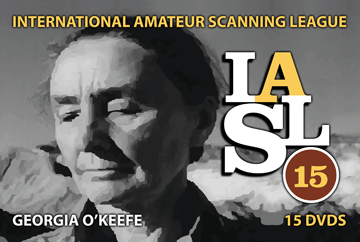 Carl Malamud announced yesterday the inaugural meeting of the International Amateur Scanning League (IASL) (I'm already imagining cool swag!). Malamud is taking FedFlix program to the streets! Fedflix, a joint venture between the National Technical Information Service and Public.Resource.Org, digitizes NTIS video and makes them available on YouTube, the Internet Archive, and the public.resource.org Stock Footage Library.
Well now a gang of volunteers including members of DC CopyNight and Smithsonian employees working on their own time are going to the National Archives and Records Administration (NARA) and copying over 1,500 DVDs to be uploaded to the net.
Malamud said:
What makes this grassroots digitization effort so remarkable is that it has the full support of the government. Indeed, David Ferriero, the U.S. Archivist, joined me in the initial meeting where we taught volunteers how to rip DVDs!
Kudos to Malamud and the IASL!
And this makes me think that more libraries and librarians should be doing the same thing for govt documents. Why not set up your own scanning operations in your depository library (
Book Liberator or
DIY Book Scanner can show you
how to digitize on the cheap!) and then deposit those scans into the Internet Archive's
US Documents Collection (don't forget to follow
FDLP digitization standards!). Scans could also be ingested into
FDSys (when they've got that capability working ;-)). So get to it; what are you waiting for?!
Continue reading →Continue Reading →
February 5, 2010 / Leave a comment
[UPDATE: I added the slides for Tom Bruce's talk]
Shinjoung and I submitted a panel on the future of govt information for iConference 2010 in Champaign, IL. We had a good far-reaching discussion with Tom Bruce (Cornell Legal Information Institute), Daniel Schuman (Sunlight Foundation) and Cindy Etkin (GPO). Below are my slides and notes. I've also attached the notes and abstract as PDFs. As Tom tweeted, "World's problems: solved."
If the other panelists agree, I'll post their notes/slides as well. This is of course an ongoing conversation so please feel free to leave comments, questions, rants etc.
--that is all!
3:45 - 5:15 pm Thursday, February 4, 2010
Roundtable 4 : : Technology Room
"Gone today, Here tomorrow: assuring access to government information in the digital age." ShinJoung Yeo, University of Illinois; and James R. Jacobs, Stanford University
Panelists:
- Shinjoung Yeo, Moderator
- James Jacobs, Stanford University Library
- Thomas Bruce (Legal Information Institute, Cornell University)
- Daniel Schuman (Sunlight Foundation policy director)
- Cindy Etkin (Govt Printing Office)
[SLIDE 1: govt documents]
Right up front, I'm a librarian and a collaborator in the LOCKSS distributed digital preservation project (Lots of Copies Keep Stuff Safe). I've been in academia/education my whole life as a student, teacher, librarian and technologist. I've been a government information/FDLP librarian since 2002 and currently am serving a 3 year term on the Depository Library Council, the body which informs and advises the Govt Printing Office regarding issues of the Federal Depository Library Program (which Cindy talked about). So my mindset/perspective/bias is from one who assists in the scholarly communication process, one who believes that libraries have a place in the digital information landscape, and one who believes strongly in the idea that access to govt information is a fundamental right. As Ralph Nader has said, “There can be no daily democracy without daily citizenship.” And there can be no citizenship without access to government information.
[SLIDE 2: mmm documents]
With that in mind, I'd like to talk about the underlying historical ideals of the FDLP, discuss how those ideals have been under fire from both within and without the library community and argue that those ideals applied to today's information landscape give us the best chance at access to and long-term preservation and assurance of govt information.
[SLIDE 3: FDLP logo]
The federal depository library program (FDLP) has been around since 1813 in one form or another. The basis underlying the need for an FDLP is to give the public free access to government information. Depository libraries have long safeguarded the public's right to know by cooperating with and receiving for free the govt publications published by the Govt Printing Office (GPO), organizing, maintaining, and preserving those publications, assisting users in accessing said information in a geographically dispersed system and most importantly, assured that govt information is freely available and tamper-proof -- think Napster for govt information. Taken together, the collections of the 1238 depository libraries make up the historic corpus of govt information available for free to every citizen. Jessamyn West of librarian.net, recently called the FDLP the longest running open source project. I would add that it's the longest government-run public-centric open-source project to support the democratic ideal.
[SLIDE CHUCK QUOTE]
Over the last 20-30 years, developments in publishing and Internet technologies have affected the way government information is produced, disseminated, controlled, and preserved. These changes have affected the policies and procedures of the GPO and, in turn, have affected the depository library program. Despite the often-heard promises that Web technologies will bring more information to more people more quickly and easily, the actual effects have been decidedly mixed. The highly visible, short-term successes of rapid dissemination of single titles directly to citizens (e.g., the large number of downloads of the 9/11 report) mask the loss of a secure infrastructure (GPO's Federal Digital System (FDsys) notwithstanding) for long-term preservation of and access to government information as more and more agencies publish content on their own Web sites rather than using the GPO conduit (which librarians call "fugitive documents") and very few agencies publish to any standards or have policies in place that deal with archiving and preservation. As Chuck Humphrey, a data librarian friend of mine, once said, “there seems to be an inverse relationship between convenience of dissemination and preservation standards.”
In addition to this lack of a secure infrastructure, the growing din of the call for digitization of historic govt publications (most recently the Ithaka/ARL report "Documents for a Digital Democracy: A Model for the Federal Depository Library Program in the 21st Century"), while no doubt a boon for access today, is somewhat of a red herring that makes library administrators believe that they will soon be able to dispose of their physical collections and use that space for today or tomorrow's buzz word. This call for digitization may instead have the deleterious affect of damaging the long-term preservation of govt publications.
Lastly, the growing trend toward privatization of govt information has actually caused a decrease in public access despite it's digital nature. This is not a new trend. Herbert Schiller noted this in 1986 in his book "Information and the Crisis Economy." Speaking of machine readable formats, he wrote that, "Library information capability is greatly enhanced. Yet this benefit is accompanied by the abandonment of libraries' historical free access policy. User charges are introduced. The public character of the library is weakening as its commercial connection deepens. No less important, the composition and character of its holdings change as the clientele shifts from general public to the ability-to-pay user."
[SLIDE: GAO contract]
We've seen over the last 30 years a disturbing rise in Federal Agencies entering into contracts with private companies whereby public domain govt documents are digitized and then taken out of the commons via licensing agreements. See for example, the Government Accountability Office (GAO)'s deal with Thomson-West whereby Thomson-West digitized the GAO's 20,597 legislative histories of most public laws from 1915-1995 and in return received exclusive license to sell access to the content. GAO received nothing in return but an account on Thomson's service while the public received nothing at all.
Rapid technological change and the misplaced assumption that "it's all in google" have caused some in the FDLP community to question the need for the FDLP and some others to drop out of the program altogether. I believe that the inherent nature of digital information actually increases the need for a distributed network of dedicated, legislatively authorized libraries. It would be prudent to draw upon the existing infrastructure of FDLP libraries and the almost 200 years of cumulative experience of these institutions in assuring preservation of and access to government information. We must reinforce FDLP’s traditional mission of selection, collection, free access, and preservation of government information in the digital era in order to assure free access to this information into the foreseeable future. Some in the depository community, like my library, are doing just that by participating in the LOCKSS-USDOCS network, harvesting digital govt information -- for example, harvesting openCRS that Daniel mentioned along with other sites that post CRS reports -- and yes digitizing parts of their collections. But we need more libraries not less.
[SLIDE: FDLP ecosystem]
Nobody knows for sure how to preserve digital content for the long-term. This means to me that a loosely coupled, independently administered, distributed ecosystem is the best way to assure long-term preservation -- many organizations with many funding models and a distributed technical infrastructure(s) have a better shot at preservation than 1 or 2 organizations -- especially if one of those organizations has a tenuous budget, or is a private corporation etc.
Imagine if you will 2 future govt information systems: on the one hand, the system where there are one or two digital collections (say for example GPO's Federal Digital System (fdsys) and Portico, the dark archive currently housing digital journals); and on the other hand, one with many digital collections in fdlp libraries. How would each of these deal with or react to different stress situations or threat models (e.g., reduced budgets, increased demand for privatization, increased demand for censorship or control or removal of information, media/hardware/software/network failure, natural disaster, organizational failure etc.)? It's easy to see that a highly replicated, distributed FDLP model of preservation would deal with these situations much better than a centralized model. A web is much stronger than a silo.
[SLIDE: Federal Register XML]
law.gov, Carl Malamud’s proposal for a registry and repository of all legal information -- from what I've seen and heard and read, is a compelling proposal for a significant piece of the federal (and state) legal information ecosystem. What we ought to be doing is a) figuring out how to make law.gov a reality; b) figuring out how to expand it beyond legal materials to include ALL federal information -- information from all 3 branches of government, federal agencies as well as the regional and local offices of those agencies, data and statistics, the entire Congressional/legislative process including the funding that goes into that process to grease the skids so to speak, and making sure public information stays in public control; and c) MOST IMPORTANTLY from my perspective as a librarian, figure out how to preserve that ecosystem for the long term so that the public can inform itself not just today or tomorrow but 100 years from now. Now the 4 of us on this panel are just 4 players with dogs in this fight. But if we agree on the goals, then we ought to work together to proceed toward them and mobilize our communities and the public to support this endeavor.
It's going to take the government (and not just GPO) being serious about transparency and funding the necessary changes in its own federal information distribution system to include open format standards with no DRM, bulk data channels, indexing, description, collection and authentication of information resources, multiple digital preservation strategies to not only assure preservation but also to insure against tampering and deletion of vital information (which, as I've stated earlier, the FDLP historically has done very well!). It's also going to take libraries being serious about and applying the ideals of the FDLP to build a distributed digital infrastructure that takes into account access to as well as preservation of digital govt information.
I agree with Tom and am absolutely convinced that the changes in the information ecosystem that are needed should not be left to the market because the information market leans heavily toward monopoly, proprietary standards, licensing restrictions, lack of access, "rights management" and the like.
If an evolving ecosystem that is free, open, standards-based, authenticated, and privacy-protecting is built and sustained correctly then citizens, libraries, non-profit watchdogs, hackers, activists, AND government will thrive.
[SLIDE 7: THANKS! lockss, archive-it]
digital changes a lot of things about information, but it doesn't change the need to fund it, collect it, share it, preserve it, and give access to it. As my friend and colleague Jim Jacobs recently stated, "lots of collections keep stuff safe!"
Continue reading →Continue Reading →
February 1, 2010 / Leave a comment
Today the Department of Defense (DoD) released it's once-every-four-years report to Congress on the military's defense planning called the Quadrennial Defense Review 2010 (see DoD press release).
Significant highlights of the report include the consideration of the significance of climate change on national security; the greening of the Department of Defense, including efforts to make the military more environmentally friendly, to anticipate and prepare for environmentally driven crises and disasters, and to achieve energy security; and efforts to convert the nontactical vehicle fleet away from gasoline-dependence, and a Navy plan to deploy a carrier strike group running on biofuels and nuclear power by 2016.
For more analysis of what's inside the QDR, please see the following articles:
All of the strategic defense reviews are available at
DoD Strategic Defense reviews including the Quadrenial Defense Review (QDR), Nuclear Posture Review (NPR), Ballistic Missile Defense Review (BMDR) and the Space Posture Review (SPR).
Continue reading →Continue Reading →
February 1, 2010 / Leave a comment
This month's depository spotlight shines on University of Maryland's Thurgood Marshall law Library. Congratulations to Bill Sleeman, Jeff Elliott and the rest of the staff at TMLL! The spotlight highlights 2 solid long-standing digital projects from TMLL:
For those projects as well as their everyday work to support their community, TMLL deserves the spotlight!
But I also found another aspect of their work very interesting and worthy of highlighting. This aspect was mentioned in the post to the FDLP-l listserv announcing the spotlight:
Do you ever wonder how your library can contribute online content to the depository community when you do not have a large staff, extensive resources, or state-of-the-art digitization facilities? Read about the variety of projects that the Thurgood Marshall Law Library at the University of Maryland School of Law manages. Despite being geared towards the Thurgood Marshall Law Library's own specific user group, every library can profit from their focused and high quality endeavors.
Many libraries are creating unique digital research collections that both support their own local user base as well as the larger public's information needs. Depository collections offer a vast and rich base from which to build these digital collections. Whether you work in a library that supports 900 or 90,000 information seekers, depository libraries can and DO assist in the larger collaborative work of giving access (digital or otherwise) to historic and current government documents. Whether your library is hosting 10 digital documents locally or involved in a collaborative digital project in partnership with GPO and/or a federal agency, please consider listing your collection in the
FDLP Registry of U.S. Government Publication Digitization Projects
Congratulations once again to the staff at the Thurgood Marshall Law Library!
Continue reading →Continue Reading →
January 26, 2010 / Leave a comment
The folks at Communia the European Thematic Network on the digital public domain have laid out a clear, concise, easy to understand Public Domain Manifesto calling for the preservation and strengthening of the public domain and calling on cultural heritage organizations (including libraries!) to ensure that works in the Public Domain are available to all of society. Please read the manifesto and consider signing on.
On a side note, This isn't the first manifesto on the block. Also check out the Charter for Innovation, Creativity and Access to Knowledge and Columbia Professor of Law Eben Moglen's dotCommunist Manifesto (coming out of the Free Software movement). These three together show that there's a significant number of people around the world who think the public domain is something that's too important to cultures to let go by the wayside.
General Recommendations
- The term of copyright protection should be reduced.
- Any change to the scope of copyright protection (including any new definition of protectable subject-matter or expansion of exclusive rights) needs to take into account the effects on the Public Domain.
- When material is deemed to fall in the structural Public Domain in its country of origin, the material should be recognized as part of the structural Public Domain in all other countries of the world.
- Any false or misleading attempt to misappropriate Public Domain material must be legally punished.
- No other intellectual property right must be used to reconstitute exclusivity over Public Domain material.
- There must be a practical and effective path to make available 'orphan works' and published works that are no longer commercially available (such as out-of-print works) for re-use by society.
- Cultural heritage institutions should take upon themselves a special role in the effective labeling and preserving of Public Domain works.
- There must be no legal obstacles that prevent the voluntary sharing of works or the dedication of works to the Public Domain.
- Personal non-commercial uses of protected works must generally be made possible, for which alternative modes of remuneration for the author must be explored.
[Thanks
BoingBoing!]
Continue reading →Continue Reading →

Latest Comments