
Home » Articles posted by James R. Jacobs (Page 102)
Author Archives: James R. Jacobs
Open Access for CRS reports bubbling to the fore
Daniel Schuman, Policy Counsel and Director, Advisory Committee on Transparency of the Sunlight Foundation, writes that Reps. Mike Quigley and Leonard Lance are leading the charge in the House of Representatives to make CRS Reports publicly accessible. They've introduced (or RE-introduced) H.Res.110 - Congressional Research Service Electronic Accessibility Resolution of 2013. Hopefully this will be the year that Congress decides to share.
Former Senator Daniel Patrick Moynihan famously said that "everyone is entitled to his own opinion, but not his own facts." In 1914, an uncharacteristically foresighted Congress spent $25,000 to establish a fact-finding arm whose mission was to gather "data ... bearing upon legislation, and to render such data serviceable to Congress." A century later, the Congressional Research Service generates hundreds of analytical non-partisan reports on legislative issues each year. CRS reports often inform public debate. A recent analysis, which found no correlation between economic growth and cutting tax rates for the wealthy, set off a re-appraisal of long-held orthodoxy about tax policy. A 2006 analysis questioning the legal rationale supporting the Bush administration's warrantless wiretapping policy caused many to look at the issue with fresh eyes. CRS analyses are routinely cited in news reports, by the courts, in congressional debate, and by government watchdogs. However, unlike its sister agencies that investigate federal spending and analyze the budgetary effects of legislation, CRS does not release its reports to the public on a regular basis. This was not always so, and even now CRS routinely shares its reports with officials in the executive and judicial branches and with the press upon request. Congressional offices also act to disseminate the reports, publishing some on their websites, frequently sending others to constituents in response to requests, and giving them to reporters (often to help push a political narrative.) But for a member of the public, it's difficult to access reports generated by the 600-person $100 million-a-year agency in any comprehensive way. Efforts by non-profit organizations to gather and re-publish the reports online have met with limited success. The private sector has stepped in, selling access to the reports at $20 a pop, but the premium accentuates the gap between the elites and everyone else.Continue reading
What the White House Looks Like Completely Gutted
The National Journal posted a story about the renovation of the White House in the years after WWII. See the photos from the National Archives via the Truman Library.
Experts called the third floor of the White House "an outstanding example of a firetrap." The result of a federally commissioned report found the mansion's plumbing "makeshift and unsanitary," while "the structural deterioration [was] in 'appalling degree,' and threatening complete collapse." The congressional commission on the matter was considering the option of abandoning the structure altogether in favor of a built-from-scratch mansion, but President Truman lobbied for the restoration. "It perhaps would be more economical from a purely financial standpoint to raze the building and to rebuild completely," he testified to Congress in February 1949. "In doing so, however, there would be destroyed a building of tremendous historical significance in the growth of the nation." So it had to be gutted. Completely. Every piece of the interior, including the walls, had to be removed and put in storage. The outside of the structure-reinforced by new concrete columns-was all that remained.

Lunchtime listen: Razzle dazzle WWI ship camouflage
99% Invisible is one of my favorite podcasts. Roman Mars talks about architecture and design in a really thoughtful and compelling way. He had a recent episode about razzle dazzle ships' camouflage in which he included images from the Rhode Island School of Design (RISD)'s Fleet Library (which is NOT connected to the Navy in any way :-)). Check out this fascinating listen about ships and camouflage.
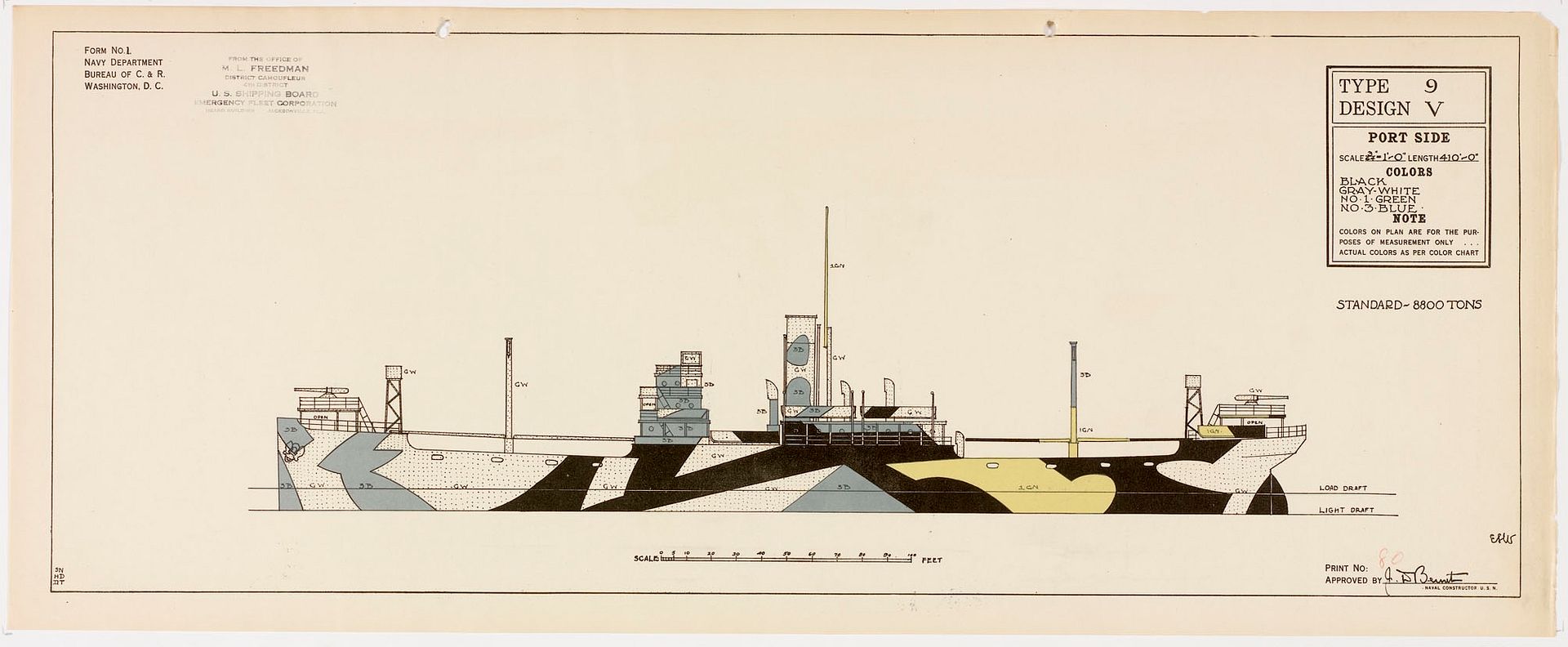 (Erik Gould, courtesy of the Fleet Library at RISD, Providence, RI..)
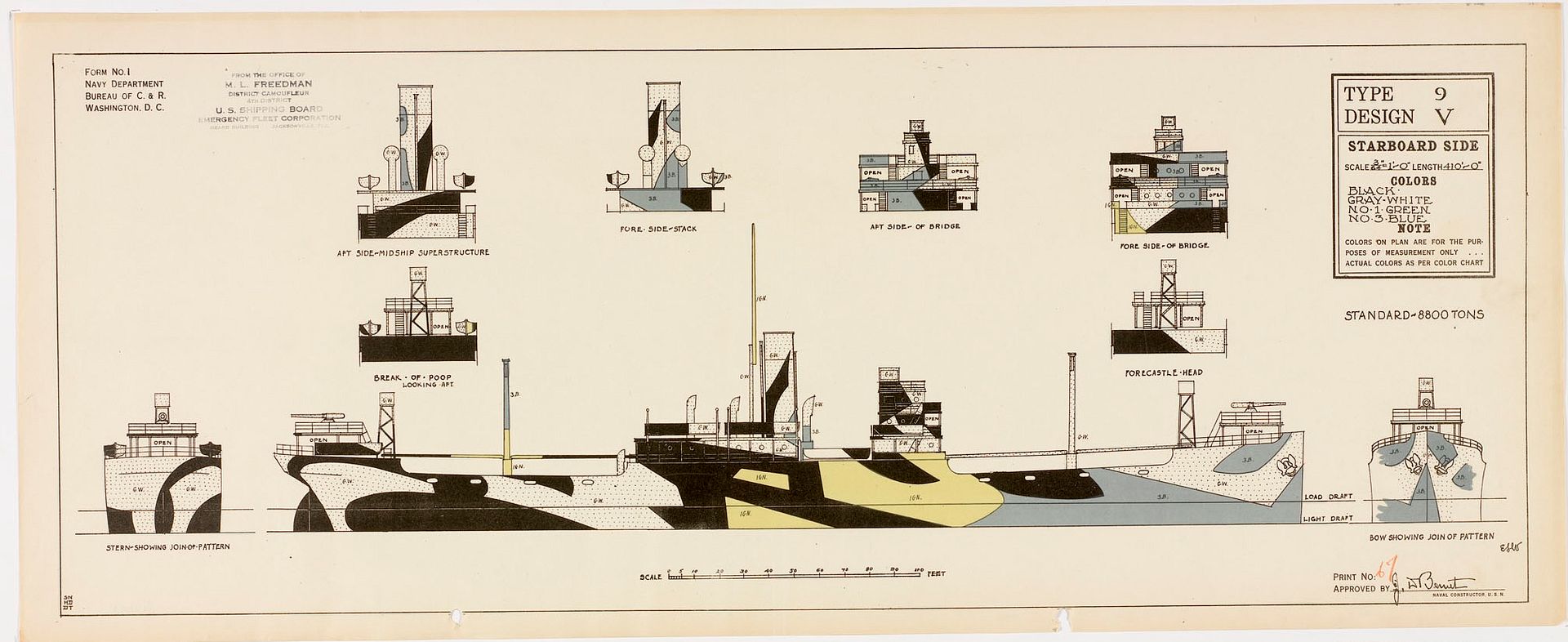
(Erik Gould, courtesy of the Fleet Library at RISD, Providence, RI.)
Becoming invisible with your surroundings is only one type of camouflage. Camofleurs call this high similarity or blending camouflage. But camouflage can also take the opposite approach.
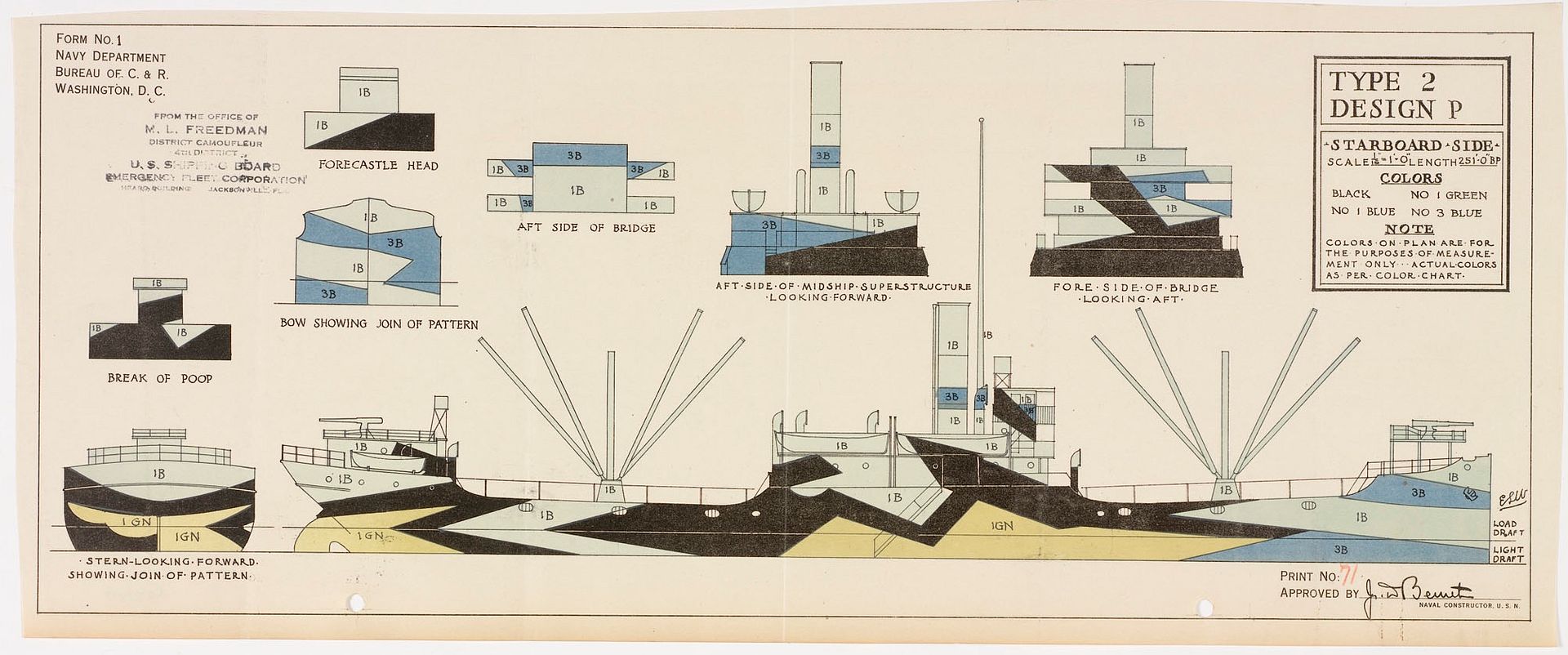
(Erik Gould, courtesy of the Fleet Library at RISD, Providence, RI.)
Continue readingAaron Swartz to be awarded ALA’s James Madison Award. Ceremony streamed live
[Update 3/15/13: Here's the ALA announcement.] It was just announced that Aaron Swartz will be awarded the American Library Association's James Madison Award awarded annually to "honor individuals or groups who have championed, protected and promoted public access to government information and the public’s “right to know” on the national level." It is fitting that Aaron win the award -- and be presented by Rep. Zoe Lofgren (D-CA), a strong advocate for digital rights in Congress who won the award last year and who introduced Aaron's Law to try and amend the Computer Fraud and Abuse Act (CFAA). The ceremony will be webcast live tomorrow (Friday March 15, 2013) at 8:30am eastern time. We'll post the video as soon as its made available. Continue reading
Searching for a savior: who will serve as steward of Canadian government information?
[Editor's note: This is a guest post from Amanda Wakaruk, Government Information Librarian at the University of Alberta Libraries.] Over the past week, the British Columbia Freedom of Information and Privacy Association (FIPA) wrote about and then provided the public with access to documentation outlining a Web Renewal Action Plan that calls for the reduction of Government of Canada (GoC) websites from roughly 1500 down to 1 (see FIPA’s blog entries, linked below). This plan appears to exacerbate the problems I noted in an FGI blog post last year: Government of Canada Publications -– It’s About Access, Not Format. For example, there is no publicly available evidence that the GoC has implemented or plans to implement a comprehensive web archiving plan before reducing its web footprint. As a practitioner, I run into the problem of missing (i.e., unarchived) born digital content on a regular basis. (And no, Library and Archives Canada is not collecting websites for public consumption – these programs stopped in 2009.) The question I lost sleep over last year is more pressing than ever: who is archiving the web content of the GoC? A group of institutions is working hard to setup a LOCKSS network that will help preserve the content of the Depository Services Program’s (DSP) e-archive (see the nascent CGI-PLN Wiki – email me if you would like to become a member or can help with funding to try and make this content accessible in the event that we lose access to the DSP website). Our first collection -- as important and impressive as it is at over 110,000 pdfs -- only represents a fraction of the content produced by the GoC. (As you might recall, the DSP does not collect html, only pdfs… and the latter format is discouraged by current GoC web protocols). I am proud of the fact that the University of Alberta Libraries, my home institution, was able to capture select GoC websites using a fee-based (and US-based) Archive-IT account but no single academic institution can afford to act as steward for the output of the federal government. Happily, we have a colleague in the University of Toronto Libraries, who started capturing GoC web content using Archive-IT a few weeks ago as part of a joint “rescue mission” to save the contents of the Aboriginal Portal of Canada before it was deleted from government servers (the results of these crawls are accessible here and here). The bigger question, of course, is this: If not the government, then who is responsible for collecting and preserving the born digital content of the GoC? If it *is* the academic sector’s responsibility then where will the funding come from? Recent provincial budget cuts in Ontario and Alberta have been hard on this sector, to say the least. If there is a White Knight out there, now would be a great time to step forward! The elimination of print publications coupled with a lack of web archiving and a directive to make only ‘current’ information available online marks an incalculable loss. Countless students describe the sessional papers as “life changing” and scholars from all walks of life routinely draw on statistical information produced by their governments to help make sense of our place in the world and inform ways to improve it (as an aside, Statistics Canada plans to remove publications more than a few years old from their website). It is unthinkable that future generations will not have access to information produced by their government today… information that should be informing our cultural narrative. Reaction to Web Renewal Action Plan
- Harper Government Centralizing, Slashing Federal Web Info
- Federal Open Government Minister Not a Fan of Open Government. Vincent Gogolek, Executive Director, Freedom of Information and Privacy Association Huffington Post Canada, British Columbia - first post includes links to the Web Renewal Action Plan http://fipa.bc.ca/library/Government%20Documents/GoC_web_plan_Part1.pdf http://fipa.bc.ca/library/Government%20Documents/GoC_web_plan_Part2.pdf
- Stephen Harper asked Tony Clement to ‘significantly reduce’ number of government websites, says document. Mike de Souza, Edmonton Journal.
- Historical letters not wanted at Library and Archives Canada, critics say. Joseph Hall, Toronto Star
- Tories Restrict Online Data Mining, But Not for Social Media. Globe and Mail
Latest Comments